By Cindy Raney | Cindy Raney & Team
Fresh paint, styled furniture, and a well-placed candle can make almost any room feel inviting on a Saturday showing. But the factors that determine whether a property holds its value over ten, fifteen, or twenty years have very little to do with what catches your eye in the first five minutes.
We’ve spent nearly two decades helping buyers in Fairfield County see beyond the surface. The conversations that matter most are rarely about countertops or lighting fixtures. Instead, they’re about the orientation of the house on the lot, the ceiling height in the primary living spaces, whether the floor plan can adapt to changing needs, and whether the bones of the house will carry the next chapter of someone's life without a major renovation.
This guide will help you look beyond first impressions and focus on the elements that matter most for enduring worth, future flexibility, and a daily living experience that feels truly special in Fairfield County.
Key Takeaways
- The elements that hold long-term value in a home, such as location, lot characteristics, layout, light, and structural integrity, are the ones that are hardest to alter after purchase.
- In Fairfield County, where housing stock ranges from century-old colonials to recent new construction, understanding a home's structural bones matters more than its current finishes.
- Natural light, ceiling height, and spatial flow are among the most overlooked drivers of both daily enjoyment and resale appeal.
- A home that can adapt to changing needs, whether through flexible rooms, expansion potential, or a well-sized lot, tends to outperform one that is finished to perfection but locked into a single use.
Location and Micro-Neighborhood Dynamics
In Fairfield County, location remains the most significant driver of value, but this goes far beyond just the zip code. Here, micro-neighborhood dynamics can change dramatically from one street to the next, affecting everything from daily routines to resale desirability.
For example, a home on a quiet, cul-de-sac in Westport will offer a distinctly different experience from a property just a block away on a busy throughway. Buyers often discover that even neighboring roads can have different rhythms; some settings are peaceful retreats, while others become thoroughfares during school drop-off or summer weekends.
Proximity to beloved amenities, whether it’s the train for New York commutes, a five-minute drive to the beach, or nearby boutiques and restaurants, shapes both your lifestyle and the home’s future marketability. Many of Fairfield County’s most sought-after addresses balance serene spaces with convenience.
Furthermore, it’s not just the distance to shops and beaches that matters; traffic flow, parking availability, and seasonal dynamics all play a role. Some neighborhoods quiet down dramatically in winter, while others bustle year-round. To fully appreciate value, spend time at different hours and in different seasons to sense what living there is truly like.
For example, a home on a quiet, cul-de-sac in Westport will offer a distinctly different experience from a property just a block away on a busy throughway. Buyers often discover that even neighboring roads can have different rhythms; some settings are peaceful retreats, while others become thoroughfares during school drop-off or summer weekends.
Proximity to beloved amenities, whether it’s the train for New York commutes, a five-minute drive to the beach, or nearby boutiques and restaurants, shapes both your lifestyle and the home’s future marketability. Many of Fairfield County’s most sought-after addresses balance serene spaces with convenience.
Furthermore, it’s not just the distance to shops and beaches that matters; traffic flow, parking availability, and seasonal dynamics all play a role. Some neighborhoods quiet down dramatically in winter, while others bustle year-round. To fully appreciate value, spend time at different hours and in different seasons to sense what living there is truly like.
Micro-Location Matters
- Street character and local traffic patterns throughout the year.
- Proximity to the train, town center, and the beach.
- The effect of seasonal changes on noise, privacy, and community rhythm.
The Lot Tells a Story the House Cannot
In Fairfield County, lot characteristics are uniquely impactful, shaping your privacy, potential, and sense of place. A house can be gutted and rebuilt. A lot can’t be widened, regraded in fundamental ways, or relocated relative to the street, the sun, or the neighbors.
Start with size and shape. In Greenfield Hill, where multi-acre properties define the neighborhood's character, the lot provides privacy, setbacks, and room for future additions or amenities like a pool or guest cottage. Closer to downtown Fairfield, where quarter-acre lots are typical, the value lies in proximity to all the amenities; Penfield Beach, Post Road, and the train station are a quick trip from your front door.
Beyond dimensions, consider orientation and sun exposure. Homes with south-facing backyards benefit from all-day light, ideal for gardening or evening gatherings. Alternatively, a north-facing slope may mean you lose evening sun earlier, impacting how you use the space after work or on weekends.
The property itself matters even more. Flat yards are a premium, especially if you’re envisioning play areas, a pool, or expansive outdoor entertaining spaces. In contrast, sloped lots can limit your usable square footage and increase landscaping needs or introduce drainage challenges.
Fairfield County’s changing seasons also influence privacy. A yard that feels secluded in the summer when foliage is full may offer a completely different experience once the leaves fall, suddenly exposing your backyard to neighbors or roadways.
Expansion potential is another key consideration within property lines. Larger lots, particularly those with minimal restrictions, offer key opportunities like installing a pool, a guest cottage, or an additional garage in the future. In a market where land values are significant, the difference between a constrained and flexible lot often translates directly into long-term appreciation.
Start with size and shape. In Greenfield Hill, where multi-acre properties define the neighborhood's character, the lot provides privacy, setbacks, and room for future additions or amenities like a pool or guest cottage. Closer to downtown Fairfield, where quarter-acre lots are typical, the value lies in proximity to all the amenities; Penfield Beach, Post Road, and the train station are a quick trip from your front door.
Beyond dimensions, consider orientation and sun exposure. Homes with south-facing backyards benefit from all-day light, ideal for gardening or evening gatherings. Alternatively, a north-facing slope may mean you lose evening sun earlier, impacting how you use the space after work or on weekends.
The property itself matters even more. Flat yards are a premium, especially if you’re envisioning play areas, a pool, or expansive outdoor entertaining spaces. In contrast, sloped lots can limit your usable square footage and increase landscaping needs or introduce drainage challenges.
Fairfield County’s changing seasons also influence privacy. A yard that feels secluded in the summer when foliage is full may offer a completely different experience once the leaves fall, suddenly exposing your backyard to neighbors or roadways.
Expansion potential is another key consideration within property lines. Larger lots, particularly those with minimal restrictions, offer key opportunities like installing a pool, a guest cottage, or an additional garage in the future. In a market where land values are significant, the difference between a constrained and flexible lot often translates directly into long-term appreciation.
Lot Characteristics That Shape Long-Term Value
- Lot size and shape determine whether there is room to build an addition, add a detached structure, or install a pool within setback requirements.
- Orientation and sun exposure, impacting natural light through the windows, outdoor usability, and even heating costs.
- Drainage, grading, and flood zone status, especially relevant for properties near the water.
- Privacy and buffer from neighbors, including mature trees, stone walls, or natural topography.
Layout and Floor Plan Adaptability
A kitchen can be renovated in a matter of months. A floor plan that does not work well, however, is a structural problem. Moving load-bearing walls, relocating staircases, or reconfiguring the relationship between the kitchen and the main living area in a center-hall colonial requires architectural planning, engineering, and a construction timeline that most buyers underestimate.
Fairfield County's housing stock includes a range of layouts. A classic center-hall colonial in Southport will have a more formal separation between rooms, whereas a newer build in the University area might offer an open-concept main floor with a first-floor primary suite. Both have trade-offs, and the key question is whether the layout serves your life without requiring a major intervention.
Open sightlines, a logical flow between shared and private spaces, and the possibility of creating multifunctional rooms all contribute to lasting value. Floor plans that can flex to accommodate a home office, multigenerational living, or changing needs without major reconstruction hold their value over time. In contrast, homes with segmented or awkward layouts may struggle to attract future buyers, regardless of finishes or fixtures.
Fairfield County's housing stock includes a range of layouts. A classic center-hall colonial in Southport will have a more formal separation between rooms, whereas a newer build in the University area might offer an open-concept main floor with a first-floor primary suite. Both have trade-offs, and the key question is whether the layout serves your life without requiring a major intervention.
Open sightlines, a logical flow between shared and private spaces, and the possibility of creating multifunctional rooms all contribute to lasting value. Floor plans that can flex to accommodate a home office, multigenerational living, or changing needs without major reconstruction hold their value over time. In contrast, homes with segmented or awkward layouts may struggle to attract future buyers, regardless of finishes or fixtures.
What Makes a Floor Plan Truly Adaptable?
- Whether the main living spaces, including the kitchen and primary gathering area, are connected in a way that supports daily life without structural changes.
- The presence of a functional mudroom, pantry, or transitional space near the entry or garage reduces clutter and adds utility that buyers consistently value.
- Room proportions that allow for flexible furnishing. A narrow living room or an awkwardly shaped bedroom may work for staging but frustrate actual living.
- The potential for a first-floor bedroom or office, which adds long-term adaptability for aging in place, multigenerational living, or remote work.
Natural Light Is a Permanent Asset
Light is one of the most emotionally powerful qualities a home can have, and it’s also one of the most difficult to add after the fact. You can install a skylight or enlarge a window, but you cannot change the compass orientation of a room, the setback from neighboring structures, or the ceiling height that determines how deeply light penetrates a space.
In Fairfield County, homes that capture morning and afternoon sun feel fundamentally different to live in. A south-facing kitchen that fills with light by 8 a.m. shifts the tone of an entire day. A living room with tall windows facing west catches the low winter sun in a way that makes winter days feel warmer
The number and placement of windows matter, but so does the openness of the lot itself. Homes that are thoughtfully sited to maximize sun throughout the day not only feel warmer and more welcoming but also photograph beautifully. This factor directly impacts marketability when it’s time to sell.
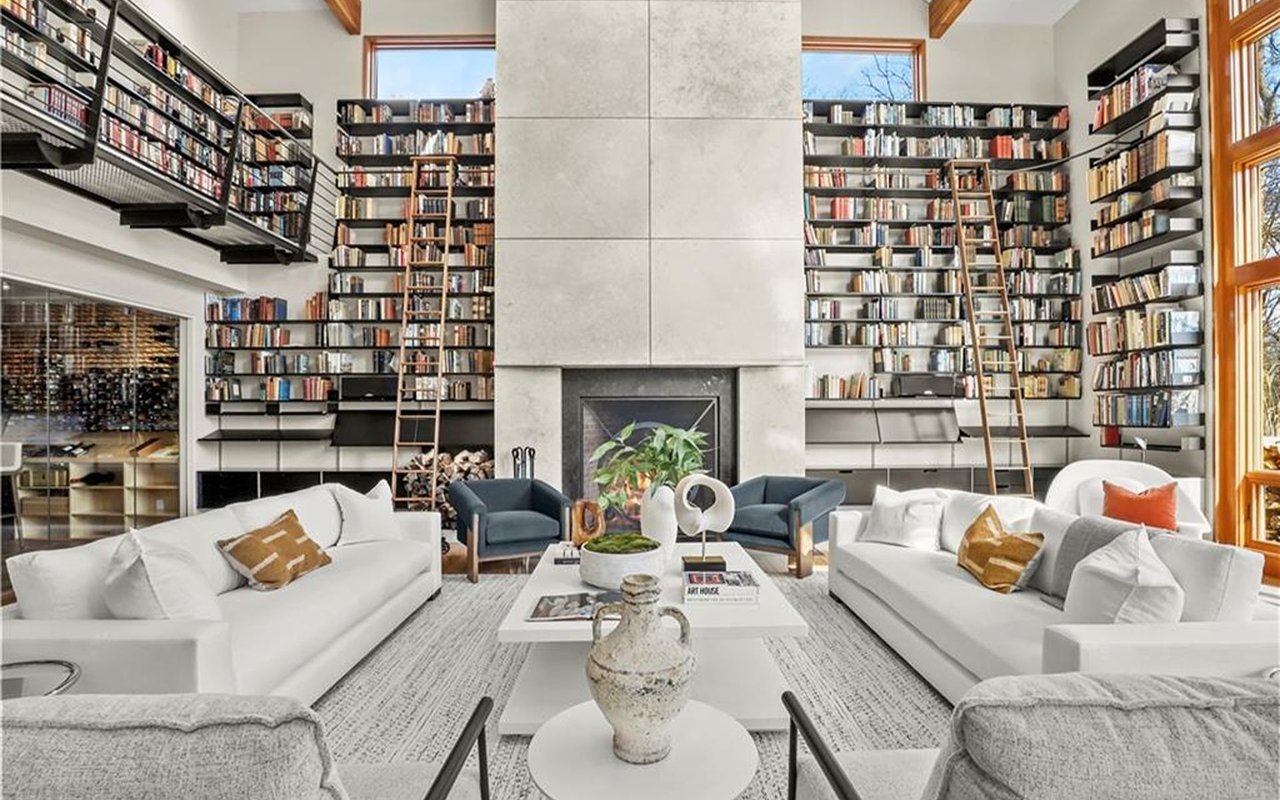
Ceiling height matters as well. Ten-foot ceilings on the main level allow light to travel deeper into a room, but eight-foot ceilings with small windows can make even a spacious room feel compressed.
In Fairfield County, homes that capture morning and afternoon sun feel fundamentally different to live in. A south-facing kitchen that fills with light by 8 a.m. shifts the tone of an entire day. A living room with tall windows facing west catches the low winter sun in a way that makes winter days feel warmer
The number and placement of windows matter, but so does the openness of the lot itself. Homes that are thoughtfully sited to maximize sun throughout the day not only feel warmer and more welcoming but also photograph beautifully. This factor directly impacts marketability when it’s time to sell.
Ceiling height matters as well. Ten-foot ceilings on the main level allow light to travel deeper into a room, but eight-foot ceilings with small windows can make even a spacious room feel compressed.
Factors to Look For When Assessing Light
- Window size, placement, and the direction they face, with particular attention to the main living spaces where you will spend the most waking hours.
- Ceiling height on the first floor, which affects both the quality of light and the overall spatial feeling of the home. Many newer builds and gut renovations in Fairfield County feature nine- or ten-foot ceilings for this reason.
- The relationship between the house and the structures around it. A home set close to a neighbor's two-story wall on the south side will lose light that cannot be recovered.
- Mature tree canopy, which can provide welcome shade in summer but may block winter light if the trees are evergreen and positioned on the south or west side.
Systems and Structure Are the Quiet Value Holders
A home's mechanical systems and structural condition do not generate excitement during a showing, but they are among the most expensive elements to replace. They’re also major drivers of long-term carrying costs.
A new roof on a 3,000-square-foot home in Fairfield can run $25,000 to $50,000 or more, depending on the material. Replacing an aging HVAC system, upgrading the electrical panel to support modern loads, or addressing a failing septic system are all five-figure projects that can arrive within the first few years of ownership if the home's systems are nearing end of life.
When evaluating a home for long-term value, think about its systems in terms of remaining useful lifespan rather than current functionality. A furnace that heats the house today but is twenty-five years old is a near-term expense, not an asset. A roof that shows no leaks but has fifteen-year-old shingles in a coastal environment may have only five good years left.
Long-term value isn’t just about minimizing upfront costs but about understanding the true cost of ownership and how it aligns with your plans. Buyers who assess these systems early and plan accordingly are well-positioned for comfort and future resale.
A new roof on a 3,000-square-foot home in Fairfield can run $25,000 to $50,000 or more, depending on the material. Replacing an aging HVAC system, upgrading the electrical panel to support modern loads, or addressing a failing septic system are all five-figure projects that can arrive within the first few years of ownership if the home's systems are nearing end of life.
When evaluating a home for long-term value, think about its systems in terms of remaining useful lifespan rather than current functionality. A furnace that heats the house today but is twenty-five years old is a near-term expense, not an asset. A roof that shows no leaks but has fifteen-year-old shingles in a coastal environment may have only five good years left.
Long-term value isn’t just about minimizing upfront costs but about understanding the true cost of ownership and how it aligns with your plans. Buyers who assess these systems early and plan accordingly are well-positioned for comfort and future resale.
What to Evaluate: Major Systems
- The age and condition of the roof, HVAC system, water heater, and electrical panel, all of which have predictable replacement cycles that directly affect your annual cost of ownership.
- Foundation integrity, particularly in older homes where stone or block foundations may show signs of water intrusion or settling.
- Insulation quality and window efficiency, which determine heating and cooling costs in a climate with genuine four-season swings. A well-insulated home with newer windows will cost meaningfully less to operate year after year.
- Septic versus municipal sewer, which varies by neighborhood across Fairfield County and has significant implications for maintenance costs, expansion potential, and resale.
Architectural Integrity and Build Quality
Fairfield County’s homes tell stories: some of time-honored craftsmanship and others of modern innovation. One of the clearest signals of enduring value is consistent build quality and architectural integrity throughout the property. Original builds that have been thoughtfully maintained tend to age more gracefully than those with piecemeal additions or mismatched renovations.
Look for signs that the home’s style, proportions, and materials have been respected over time. Mismatched windows, irregular ceiling heights, or poorly integrated expansions can all undermine a home’s overall feel and, by extension, its appeal to future buyers. Consistency is key: when the character of a home has been preserved, it signals both pride of ownership and long-term desirability.
In newer construction, pay attention to materials and finishes that stand up to time and use, as well as the reputation of the builder. It’s these foundational elements, rather than surface-level trends, that sustain value.
Look for signs that the home’s style, proportions, and materials have been respected over time. Mismatched windows, irregular ceiling heights, or poorly integrated expansions can all undermine a home’s overall feel and, by extension, its appeal to future buyers. Consistency is key: when the character of a home has been preserved, it signals both pride of ownership and long-term desirability.
In newer construction, pay attention to materials and finishes that stand up to time and use, as well as the reputation of the builder. It’s these foundational elements, rather than surface-level trends, that sustain value.
Signs of Exceptional Build Quality and Integrity
- Consistent finishes and detailing across original and updated areas.
- Well-proportioned rooms and logical architectural flow from space to space.
- High-quality materials that promise to show minimal wear over time.
- Renovations or additions that feel continuous and congruent with the original home’s architectural design.
Adaptability Is the Underrated Long-Term Play
The homes that hold their value best over time tend to be the ones that can change with their owners. Properties that can accommodate lifestyle shifts without a major renovation are the ones that retain the broadest appeal at resale.
In practical terms, this means looking for homes with rooms that can serve more than one purpose. A ground-floor bedroom with a full bath can function as a guest suite, a home office, or an aging-in-place solution. A finished lower level with an exterior entrance adds flexibility for a home gym, a studio, or future rental income. A bonus room over the garage can absorb a teenager's need for independence or a parent's need for a quiet workspace.
Lot size plays into this as well, and wetlands restrictions, setbacks, and neighborhood covenants add further complexity. A property with room for a future addition, an accessory dwelling unit where zoning allows, or a detached structure offers more options. In towns like Fairfield and Westport, where zoning conversations around accessory dwelling units continue to evolve, a larger lot with expansion potential may carry increasing value in the years ahead.
Assessing renovation feasibility early in the process allows you to buy with confidence, knowing that your vision aligns with reality. An investment in due diligence at the outset often pays dividends, both for your enjoyment and for eventual resale.
In practical terms, this means looking for homes with rooms that can serve more than one purpose. A ground-floor bedroom with a full bath can function as a guest suite, a home office, or an aging-in-place solution. A finished lower level with an exterior entrance adds flexibility for a home gym, a studio, or future rental income. A bonus room over the garage can absorb a teenager's need for independence or a parent's need for a quiet workspace.
Lot size plays into this as well, and wetlands restrictions, setbacks, and neighborhood covenants add further complexity. A property with room for a future addition, an accessory dwelling unit where zoning allows, or a detached structure offers more options. In towns like Fairfield and Westport, where zoning conversations around accessory dwelling units continue to evolve, a larger lot with expansion potential may carry increasing value in the years ahead.
Assessing renovation feasibility early in the process allows you to buy with confidence, knowing that your vision aligns with reality. An investment in due diligence at the outset often pays dividends, both for your enjoyment and for eventual resale.
Signs of a Home that Adapts
- Flexible rooms on the first floor that can shift between office, bedroom, and guest suite without structural changes.
- A lot with remaining buildable area under current zoning, which preserves optionality for future additions, detached structures, or outdoor living improvements.
- Finished or easily finishable lower levels and attic spaces that add usable square footage without altering the home's footprint.
- A layout that separates shared and private spaces without feeling cramped or disconnected.
Neighborhood Trajectory and Resale Outlook
Understanding the current character of a neighborhood is important; predicting where it’s headed is essential for long-term value. Fairfield County is a region of established communities, but even here, trends can shift. Some areas experience steady appreciation and consistent demand, while others may be poised for transformation.
Factors like new infrastructure, shifts in commuter preferences, or changing buyer preferences can all shape neighborhood desirability. Look for signals of investment like renovations on nearby homes, new businesses in the neighborhood, or improved amenities, all of which point to continued momentum. Conversely, a lack of new investment or declining demand can indicate potential headwinds for future resale.
Ultimately, the home you choose should not only fit your current needs but also be positioned to attract the next buyer when the time comes. A strategic, forward-looking approach is key to maximizing your investment.
Factors like new infrastructure, shifts in commuter preferences, or changing buyer preferences can all shape neighborhood desirability. Look for signals of investment like renovations on nearby homes, new businesses in the neighborhood, or improved amenities, all of which point to continued momentum. Conversely, a lack of new investment or declining demand can indicate potential headwinds for future resale.
Ultimately, the home you choose should not only fit your current needs but also be positioned to attract the next buyer when the time comes. A strategic, forward-looking approach is key to maximizing your investment.
Gauging Neighborhood Outlook
- Signs of ongoing investment in nearby properties.
- Proximity to improvements in transportation, retail, or recreation.
- Recent sales trends and average time spent on the market.
- Unique characteristics that consistently attract buyers to the area.
FAQs
What Should I Prioritize if I Can’t Find a Home That Checks Every Box?
Focus on the factors you cannot change. Location, lot size, orientation, and the basic structural layout of a home are fixed or extremely costly to alter. Kitchens, bathrooms, and finishes can all be updated over time. A home with strong bones in the right location will almost always outperform a beautifully finished home on a compromised lot or in a weaker location over the long term.
How Important is Natural Light?
It’s more critical than most buyers realize. Light affects mood, energy efficiency, and the perceived size of every room. It also affects resale. Homes described as "sun-filled" or "light-flooded" consistently generate stronger buyer interest in Fairfield County.
Is a Home with Older Systems a Poor Long-Term Investment?
Not at all. Many of the most desirable homes in Fairfield County are older colonials, capes, and historical homes with systems that have been updated over time. The key is understanding the remaining lifespan of the major systems and factoring replacement costs into your purchase decision. A home with a recently replaced roof, a modern electrical setup, and an efficient HVAC system may offer better long-term value than a newer home built with lower-quality materials.
See Beyond the Surface with Local Expertise
The difference between a good home and a great long-term investment often comes down to knowing what to look for beneath the presentation. At Cindy Raney & Team, we bring essential insight and Fairfield County experience to every buyer conversation. We know the housing stock, the neighborhoods, and the details that determine whether a home will serve you well for the next chapter and beyond. When you’re ready to start looking, we’re here to help.
*Header photo courtesy of Cindy Raney & Team | 640 Sasco Hill Road, Fairfield
*Header photo courtesy of Cindy Raney & Team | 640 Sasco Hill Road, Fairfield