Wilton Rewarded Homes That Expanded Their Buyer Pool
The Executive Take
Every home enters the market with a buyer pool.
Some are naturally broad.
Others are inherently narrow.
Throughout the second quarter, Wilton demonstrated that the strongest outcomes belonged to sellers who understood that distinction.
Demand remained healthy.
New listings declined more than 42% compared to the same period last year, yet buyers continued paying an average of 109% of asking price, median sale price increased nearly 7%, and the number of closed sales remained unchanged.
Those statistics describe a competitive market.
They do not explain why competition formed so differently from one property to the next.
The defining story of Wilton’s second quarter was not simply that buyers remained active.
It was that homes increasingly succeeded by expanding the number of buyers willing to compete for them.
Properties that aligned pricing, preparation, presentation, and perceived value attracted broad participation.
Multiple buyers reached the same conclusion quickly, creating stronger competition and exceptional outcomes.
Homes that narrowed their audience - through ambitious pricing, deferred maintenance, presentation, or simply asking buyers to reconcile too many questions - often experienced a very different process.
Scarcity continued creating opportunity.
Buyer pool depth increasingly determined who captured it.
The Mechanism
Every seller enters the market with two assets.
The home itself.
And the number of buyers willing to pursue it.
Most conversations focus entirely on the first.
The second increasingly determines the outcome.
Buyer pools are not fixed.
Thoughtful preparation can expand them.
Strategic pricing can expand them.
Exceptional presentation can expand them.
Even small decisions that reduce hesitation often invite one or two additional buyers into the process.
That matters more than many sellers appreciate.
The difference between one interested buyer and three committed buyers is rarely incremental.
It is often transformative.
Throughout the second quarter, Wilton repeatedly demonstrated this principle.
Below roughly $1.5 million, buyer pools remained exceptionally deep. Competition frequently produced multiple offers and significant premiums above asking price.
Between approximately $1.5 million and $2.5 million, buyer participation remained healthy, but the margin for error narrowed.
Execution increasingly separated exceptional outcomes from average ones.
Above $2.5 million, buyer pools naturally became smaller. Strong sales continued occurring - including several exceptional transactions - but sellers increasingly depended on attracting a higher percentage of a much smaller audience.
That distinction explains why homes operating within the same market environment often experienced dramatically different outcomes.
Inventory did not determine the result.
Buyer participation did.
What Q2 Revealed
Viewed across the quarter, Wilton remained remarkably resilient.
Closed sales held steady despite substantially fewer new listings entering the market.
Median pricing continued climbing.
Buyers paid approximately 109% of asking price on average.
Those are not characteristics of weakening demand.
They are characteristics of selective demand.
June reinforced the pattern.
Thirty-nine homes closed during the month.
Another twenty entered contract, with additional properties moving into continued-show status.
Absorption remained exceptionally healthy.
But the market did not absorb every listing equally.
Homes that expanded their buyer pool moved quickly.
Homes that limited their audience often required more time, more negotiation, or greater price discovery before reaching agreement.
The market did not become less active.
It became more efficient at deciding where to direct its attention.
Case Study
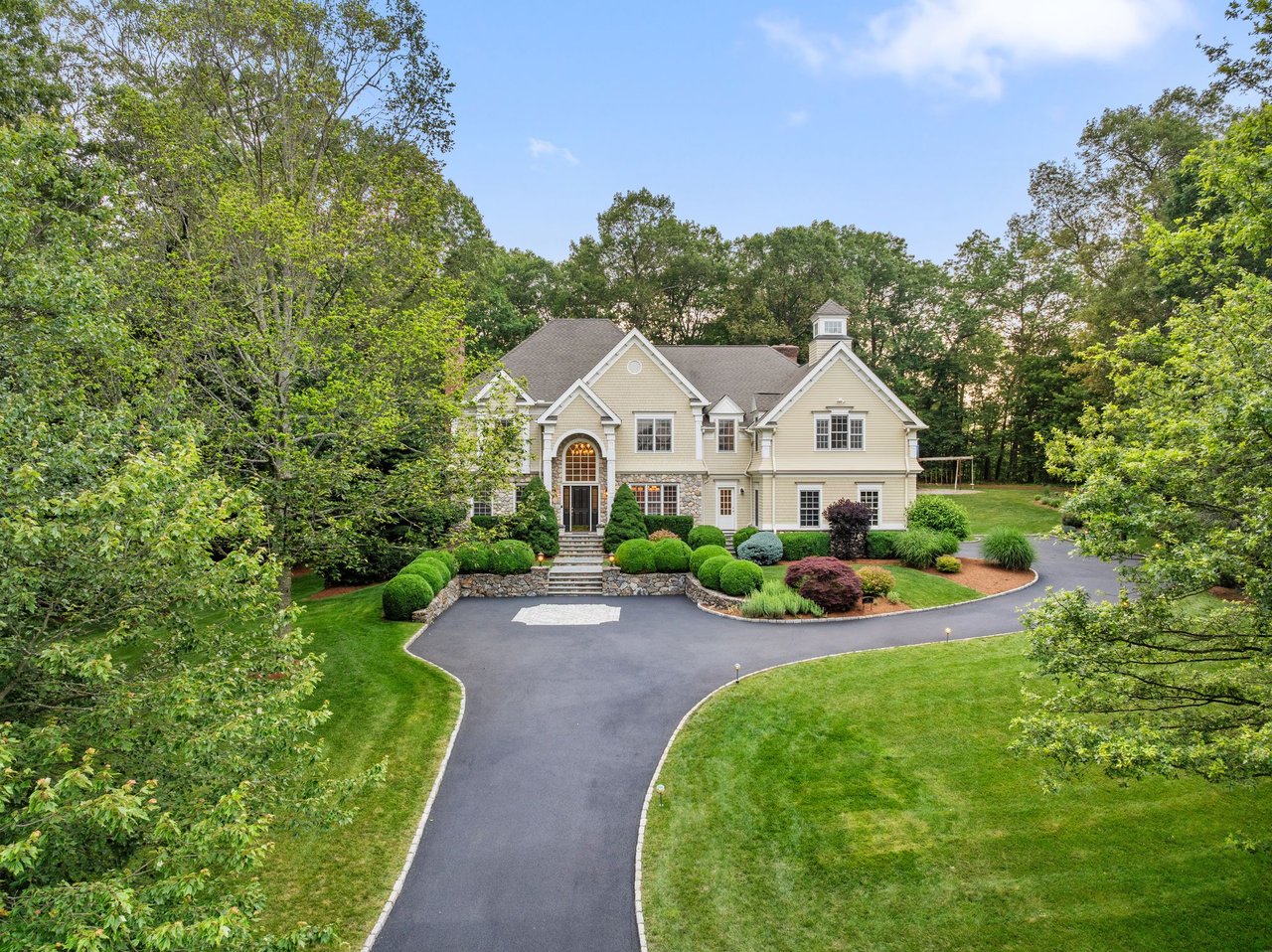
Our sale at 117 Whipstick Road illustrates this principle clearly.
Before the home reached the market, every decision - from preparation and presentation to pricing and positioning was designed around one objective:
Expand the number of buyers willing to compete.
The result was immediate participation, multiple offers, and a sale at $1,505,000, or $255,000 above asking price,
After only eight days on market.
That outcome was not created by low inventory alone.
It was created by increasing buyer participation before the first showing ever occurred.
Competition was simply the result.
Implications for Sellers
Wilton continues to offer meaningful opportunity.
Demand remains healthy.
Inventory remains constrained.
But Q2 reinforced an increasingly important lesson.
The objective is no longer simply bringing a home to market.
It is maximizing the number of buyers willing to compete once it arrives.
Before launching, sellers should ask:
- Does our pricing invite participation?
- Does our presentation broaden or narrow our audience?
- Are we eliminating hesitation before buyers experience it?
- Are we expanding our buyer pool - or shrinking it?
Those questions increasingly determine the difference between receiving offers and creating competition.
Scarcity still creates opportunity.
Buyer participation determines how much of that opportunity sellers ultimately capture.
Implications for Buyers
For buyers, Wilton continues rewarding preparation.
The strongest homes remain capable of attracting substantial competition because the deepest buyer pools continue
forming around properties that present compelling value.
At the same time, narrower buyer pools create opportunity.
Some homes remain available not because buyers disappeared, but because fewer buyers perceive immediate alignment.
Understanding whether that represents hidden value - or hidden risk - has become increasingly important.
Today’s market rewards buyers who know the difference.
The Signal We’re Watching
As Wilton enters the second half of 2026, the question is not simply whether additional inventory reaches the market.
It is whether buyer pools begin broadening across more of that inventory.
If participation continues concentrating around the strongest listings, preparation and pricing will become even more consequential.
If buyers begin engaging more evenly across available inventory, the market may gradually become more forgiving.
Today, we see little evidence of that shift.
Buyer demand remains healthy.
What varies is the breadth of participation each listing earns.
Closing Thought
Throughout the second quarter, Wilton demonstrated that every home competes for more than attention.
It competes for the size of the audience willing to pursue it.
Some homes expanded that audience.
Others narrowed it before buyers ever walked through the front door.
That distinction increasingly explains the difference between ordinary outcomes and extraordinary ones.
Scarcity continues creating opportunity.
Expanding your buyer pool increasingly determines who captures it.