When a Buyer Decides to Stop Waiting
Why a successful sale does not always require a bidding war.
There is a temptation to measure the strength of a housing market by how far buyers are willing to bid above asking price.
Southport's third quarter offered considerable support for that approach.
Seven of ten homes sold above asking, including several with substantial premiums. At the same time, three sold below asking, despite the limited number of homes available.
We concluded that buyers were not simply responding to scarcity. They were deciding whether an individual property was sufficiently compelling to justify ending their search.
October adds an interesting qualification.
Two Southport homes closed during the month.
Both sold for exactly their original asking prices.
Neither required a price reduction. Neither produced a bidding premium.
And both found buyers in a market where waiting remained an available alternative.
That raises a useful question.
If a buyer purchases a home at its asking price, without a bidding war or a negotiated discount, what does that tell us about the relationship between price, opportunity, and conviction?
Perhaps more than the absence of a premium initially suggests.
What October Actually Recorded
Southport recorded two single-family closings in October, compared with one a year earlier.
The two sales totaled $3.974 million.
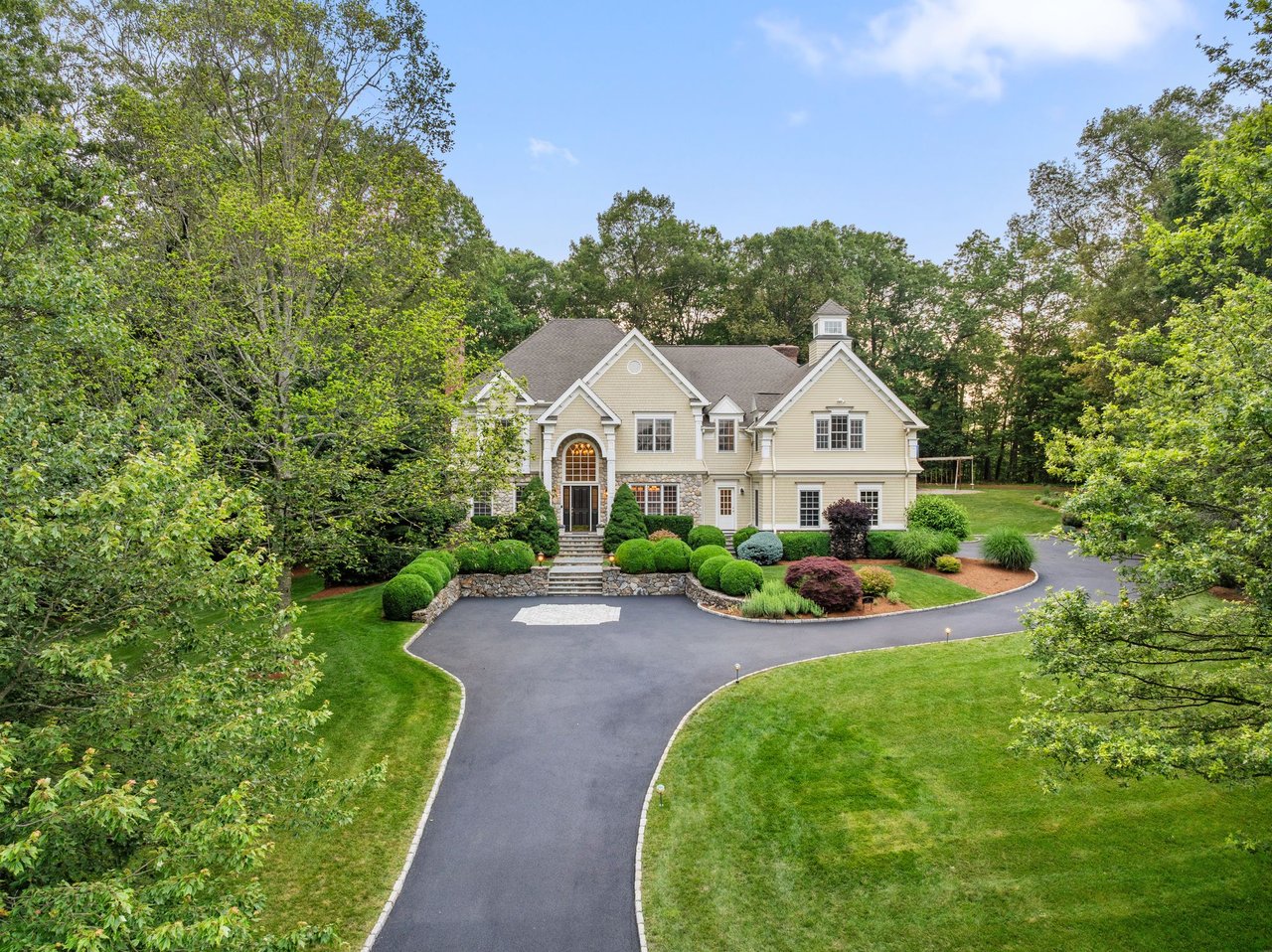
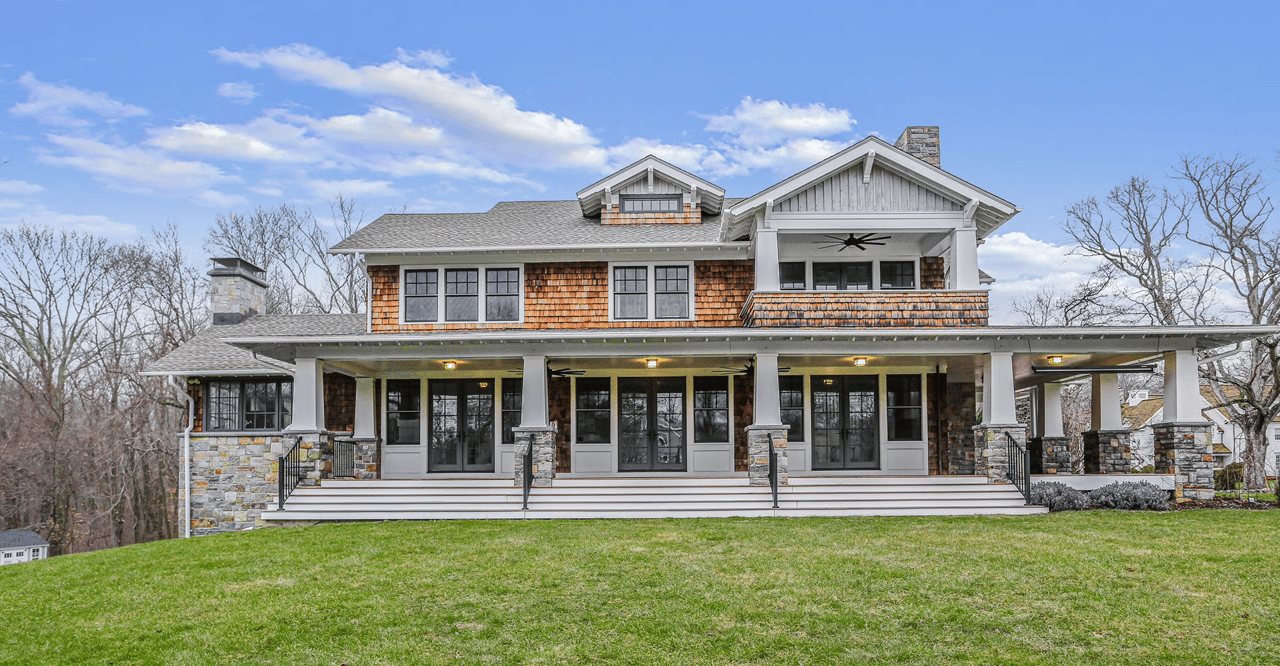
At 175 Sturbridge Road, a four-bedroom home listed for $1.275 million in August sold for $1.275 million on October 16, after 60 reported days on market.
At 42 Anvil Road, a four-bedroom home originally listed for $2.699 million in July sold for $2.699 million on October 22, after 34 reported days on market.
Both achieved 100% of their original asking prices.
The October 2025 comparison consists of one property: 1241 Hulls Highway, which sold for $3.8 million, or approximately 101.3% of its $3.75 million asking price, after 86 reported days on market.
The year-over-year comparison therefore shows twice as many closings, a lower median sale price, and shorter average market time.
But we should be careful about what those changes mean.
October 2025's median price was determined entirely by a 6,381-square-foot home on 2.48 acres.
October 2026's median reflects two smaller properties: a 2,244-square-foot home on one acre and a 3,080-square-foot home on 0.60 acres.
The decline from $3.8 million to approximately $1.99 million does not establish that Southport property values fell by nearly half.
It primarily tells us that different properties sold.
Nor should we interpret October's two closings as evidence that buyers suddenly became more active during October.
Both homes entered the market earlier, and their purchase decisions preceded their closing dates.
October recorded the completion of two transactions. It did not necessarily record the month in which buyer conviction developed.
That distinction matters because our objective is to understand how the market behaves, not simply when transactions appear in the MLS.
The Difference Between Conviction and Competition
Our September/Q3 research argued that Southport buyers retained an important alternative even when inventory was exceptionally limited.
They could wait.
We observed that this willingness to wait helped explain why some homes attracted extraordinary premiums while others required negotiation.
October does not contradict that conclusion.
It suggests that we should distinguish between two things that are often treated as interchangeable:
A buyer's conviction that a property is worth purchasing, and the competitive pressure that determines the price ultimately paid.
These are related, but they are not the same.
A buyer may strongly prefer a particular property and still purchase it at asking price if there is no competing offer requiring a higher bid.
Another buyer may have similar conviction but face several equally motivated purchasers, producing a substantial premium.
The resulting prices can look very different even when the underlying desire to own the property is meaningful in both cases.
October's two transactions are consistent with this distinction.
Both sellers achieved their original asking prices. That is a successful pricing outcome relative to their stated expectations, although it does not tell us whether the homes could have commanded more or whether either seller had alternative offers.
We cannot infer the number of interested buyers, the intensity of negotiations, or the sellers' private objectives from the closing records alone.
But we can observe that the transactions succeeded without the premiums that characterized much of Q3.
A bidding war is one expression of buyer conviction. It is not the only one.
That may be an important refinement to our understanding of Southport.
The market's strength should not be measured exclusively by the size of the premium above asking price.
It should also be evaluated by whether homes are priced and positioned in a way that enables buyers and sellers to reach an agreement.
What Happened to the Additional Choice?
September introduced another question into our research.
Six new Southport listings came to market during that month, compared with three in August.
By quarter-end, seven homes were actively available.
We wondered whether the additional inventory would begin changing the buyer's decision from:
This home or wait?
To:
This home, another Southport home, or wait?
The latest MLS snapshot gives us some evidence worth considering.
Six single-family properties were active when the November 4 report was prepared, with asking prices ranging from $599,000 to nearly $6 million.
Two properties that had been available in September - 845 Kings Highway West and 245 Cedar Road - remained active, each with a reduced asking price.
845 Kings Highway West was originally listed at $1.695 million and was re-offered at $1.645 million.
245 Cedar Road was originally listed at $2.499 million and was re-offered at $2.349 million.
Meanwhile, other properties had progressed toward sale.
305 South Gate Lane and 476 Mill Hill Terrace were reported under contract. Both had appeared among the properties under contract or continuing to show at the end of September.
35 Sherwood Place, which had been active at quarter-end, was now under contract with a continue-to-show designation. Its asking price had been reduced from $1.249 million to $1.149 million.
448 Pequot Avenue, listed in October at $1.799 million, was also under contract with a continue-to-show designation.
These records do not establish when every contract was negotiated or whether buyers compared these particular homes against one another.
They do, however, show that the additional inventory did not move through the market uniformly.
Some properties progressed toward closing.
Others remained available.
Some required adjustments to their asking prices.
That is consistent with our earlier observation that Southport buyers discriminate among individual opportunities.
But there is an important limitation.
More listings do not necessarily mean more meaningful alternatives.
A buyer seeking a historic village property near the harbor may not regard a different home, even one within a similar price range, as a suitable substitute.
A buyer prioritizing acreage, privacy, architectural character, or a particular street may face a very different set of choices from someone whose requirements are more flexible.
The relevant question is therefore not simply how many Southport homes are available.
It is how many of those homes are credible substitutes for the property a buyer is considering.
Our October evidence does not yet demonstrate that the additional September inventory materially changed buyer behavior.
It does suggest that availability alone is an incomplete measure of choice.
What This Means for Sellers
Southport's limited supply can create a meaningful advantage for homeowners considering a sale.
But that advantage should not be confused with a guarantee of competition.
Our Q3 research demonstrated that even in a scarce market, buyers could negotiate meaningful discounts when they did not believe a particular property justified the seller's expectations.
October adds another possibility.
A home can achieve its original asking price without producing a bidding war.
For sellers, the objective should not necessarily be to maximize the percentage above asking price.
That percentage depends partly on where the asking price was established in the first place.
A home deliberately priced below its likely market value may generate an impressive premium while producing a lower final price than a different pricing strategy might have achieved.
Conversely, a home that sells at its original asking price may represent a strong outcome if that price accurately reflects - or exceeds - what informed buyers would otherwise have been prepared to pay.
We cannot establish those counterfactuals from MLS data alone.
But they illustrate why sale-to-list ratios should be interpreted rather than celebrated indiscriminately.
The most important seller outcome is not how much buyers paid above asking. It is whether the strategy produced the strongest achievable result under the circumstances.
That requires understanding the property's likely buyers, the alternatives those buyers are considering, and the price at which the opportunity becomes compelling.
Preparation, presentation, condition, and positioning remain important because they influence how buyers evaluate the property.
But their purpose is not simply to generate activity.
It is to help buyers recognize value and give them sufficient reason to act.
In Southport, where the next comparable opportunity may be difficult to predict, that distinction can be especially consequential.
What This Means for Buyers
October also offers a useful reminder for buyers.
Not every desirable Southport home requires an offer above asking price.
Two October closings achieved exactly their original list prices.
That does not establish that either property could have been purchased for less.
Nor does it mean a similar approach will succeed on the next property.
It does reinforce the importance of evaluating the individual opportunity rather than assuming that every purchase in a supply-constrained market must involve aggressive bidding.
A buyer should consider the property's replaceability, the seller's expectations, its time on market, the quality of available substitutes, and the consequences of continuing to wait.
For a genuinely difficult-to-replace property, paying full asking price may represent a sensible decision.
For another property, negotiation or patience may be more appropriate.
The relevant question remains the one we identified in Q3:
If I don't buy this home, what exactly am I waiting for?
October adds a second:
If I do decide to buy it, what price does the available evidence actually justify?
The first question helps determine whether to act.
The second helps determine how.
What We're Watching
Our earlier Southport research focused on the effect of extraordinary scarcity on buyer decision-making.
We found that buyers did not necessarily become less selective when alternatives were limited.
Instead, some waited until a sufficiently compelling opportunity appeared.
October has not overturned that observation.
But it has encouraged us to refine the way we evaluate successful transactions.
Buyer conviction and bidding competition are not identical.
A transaction can succeed at asking price without a premium. A home can remain available despite limited inventory. And additional listings may create little meaningful choice if they do not satisfy the same buyer requirements.
As we move through November and December, we will be watching whether Southport's available properties progress toward contracts, remain on the market, or require further repositioning.
We will also be watching whether newly introduced properties offer credible substitutes for homes already available.
Because the holiday season typically brings fewer new listings, we will be careful not to interpret a seasonal decline in activity as evidence of weakening demand.
And we will distinguish new contracts and listing decisions from closings that largely reflect agreements reached earlier.
The question we want to answer is not simply whether Southport becomes more or less scarce.
It is whether the available opportunities are sufficiently compelling to bring buyers and sellers together.
Closing Thought
Southport's recent research has taught us something about the relationship between scarcity and choice.
July showed that a desirable address does not guarantee a desirable outcome.
August showed that limited inventory can produce patience rather than urgency.
The third quarter demonstrated that buyers could compete aggressively for some properties while negotiating discounts on others.
October adds a useful refinement.
Both homes that closed achieved their original asking prices, without the premiums that characterized many of the preceding quarter's transactions.
That does not mean buyers became less enthusiastic.
It does not mean sellers lost leverage.
And it does not establish that the market reached a new equilibrium during October.
It reminds us that the purpose of a real estate transaction is not to produce an impressive statistic.
It is to bring a willing buyer and a willing seller together at a price each considers acceptable.
Scarcity influences that process.
Competition influences that process.
So do pricing, preparation, property characteristics, and the alternatives available to each side.
But none of those factors should be mistaken for the outcome itself.
A successful sale does not require buyers to pay more than the seller asked.
It requires the property and its price to give a buyer sufficient reason to stop waiting.